

Educational Games



Educational Games – A Guide to Learning Through Play
Welcome to Pokid’s dedicated hub for Educational games, where fun meets learning in a seamless experience. This page explains how interactive challenges can reinforce core skills, why they matter for learners of all ages, and which titles stand out for their pedagogical value. Whether you are a parent seeking constructive screen time, a teacher looking for classroom resources, or a curious player eager to sharpen the mind, the following guide will help you navigate the educational gaming landscape with confidence.
Why Choose Educational Games?
Educational games are designed to embed teaching objectives within engaging mechanics. Unlike passive study methods, they provide immediate feedback, adaptive difficulty, and a sense of achievement that motivates repeated practice. The key benefits include:
- Active Recall: Players retrieve information to solve puzzles, strengthening memory pathways.
- Problem‑Solving Skills: Complex levels require strategic thinking, encouraging logical reasoning.
- Transferable Knowledge: Concepts mastered in a game often translate to real‑world tasks, such as budgeting, language use, or scientific reasoning.
- Flexible Learning Pace: Adaptive algorithms adjust challenges to match the learner’s current ability, preventing frustration or boredom.
By integrating these principles, Pokid’s Educational catalog offers a trustworthy platform for skill development without sacrificing entertainment value.
Top Picks in Pokid’s Educational Collection
Below is a curated selection of the most effective titles currently available on Pokid. Each game is linked directly to its page, and a thumbnail preview is included for quick visual reference.
This title blends the classic crossword format with arithmetic challenges. Players fill intersecting grids with correct numerical answers, reinforcing addition, subtraction, multiplication, and division while encouraging pattern recognition. The “Genius Edition” introduces timed rounds and progressive difficulty, ideal for learners who thrive on competitive pacing.
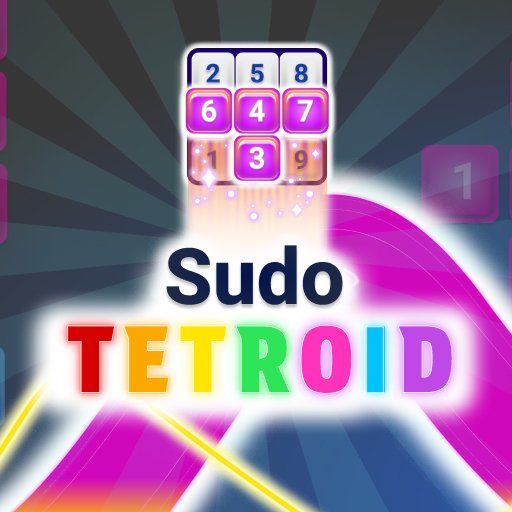
Sudo Tetroid Daily merges Sudoku logic with the spatial awareness of Tetris. Each day presents a fresh grid where players must place falling blocks while satisfying numeric constraints. This hybrid approach sharpens both numerical deduction and hand‑eye coordination, making it a perfect daily brain workout.
Word Connect Puzzle challenges players to form valid words from a scrambled set of letters. The game tracks vocabulary growth, introduces new lexical families, and offers hints that expand linguistic knowledge. It is especially useful for language learners who need contextual practice beyond rote memorization.
In Math Lava: Tower Race, players race to build towers by solving arithmetic problems under a ticking timer. Each correct answer adds a block; each mistake triggers a lava surge that threatens the structure. This high‑stakes environment cultivates quick mental calculation and stress‑management skills.
Color Water Puzzle invites players to manipulate flowing streams of colored water to match target patterns. The game teaches basic principles of color theory, logic sequencing, and cause‑and‑effect relationships. Its soothing visuals also provide a calming counterbalance to more intense math‑focused titles.
How to Get the Most Out of Educational Games
To maximize learning outcomes, consider the following structured approach:
- Set Clear Objectives: Identify the specific skill you wish to improve—whether it’s multiplication fluency, vocabulary expansion, or logical reasoning.
- Schedule Consistent Play Sessions: Short, regular intervals (10‑15 minutes) are more effective than occasional marathon sessions.
- Track Progress: Use Pokid’s built‑in statistics to monitor scores, completion rates, and areas needing reinforcement.
- Reflect After Play: Pause to discuss what strategies worked, what mistakes were made, and how the concepts apply outside the game.
- Combine Games with Real‑World Tasks: Translate in‑game achievements to everyday activities—e.g., use multiplication practiced in Math Lava to calculate grocery totals.
Tips for Parents and Educators
Educational games become powerful tools when adults guide the experience. Here are actionable tips for caregivers and teachers:
- Curate Age‑Appropriate Selections: Review each game’s difficulty curve before assigning it to a learner.
- Integrate with Curriculum: Align game objectives with classroom standards to reinforce lessons.
- Encourage Collaborative Play: Pair students for Word Connect Puzzle or host a family tournament in Sudo Tetroid Daily to foster teamwork.
- Provide Immediate Feedback: Celebrate correct answers and gently correct errors, reinforcing a growth mindset.
- Balance Screen Time: Pair digital sessions with offline activities such as handwritten math drills or physical puzzles.
By following these guidelines, you can ensure that Pokid’s Educational games serve as a complementary resource rather than a solitary entertainment option.
Conclusion – Learning Made Engaging with Pokid
Pokid’s commitment to quality educational content means each title undergoes rigorous testing for both fun factor and instructional merit. The games highlighted above represent a diverse spectrum of subjects, from mathematics to language arts, each wrapped in an intuitive interface that respects the learner’s time.
Explore the collection, set personalized goals, and watch confidence grow as skills improve. With the right approach, educational gaming becomes more than a pastime—it turns into a sustainable pathway for lifelong learning.